TL;DR
Key Takeaways
- AI is best used for low-stakes personal projects or portfolio websites. For B2B websites, where business outcomes and customer experience are important, working with a seasoned web design agency is still preferred.
- Lead generation is a key aspect of B2B web design. Unless carefully set up and maintained, AI is not a “plug-and-play” solution for capturing or nurturing leads.
- Even a small AI-generated code change can have ripple effects across a B2B website. Professional humans reviewing and testing help catch conflicts before they break existing features or make the site harder to maintain.
Is AI ready to take on B2B web design?
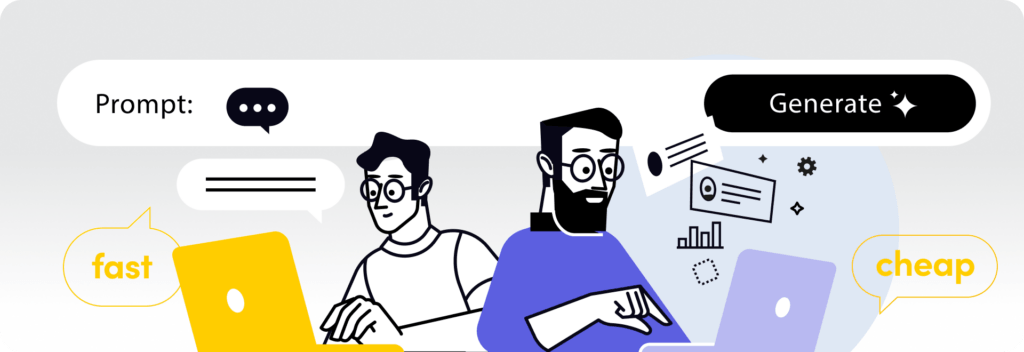
AI’s robust code-writing capabilities are now user-friendly enough for non-developers to start experimenting with building their own websites and applications. As the technology becomes easier to use, some business leaders are considering how they might use AI to help redesign their company’s websites.
AI-driven web coding tools like Cursor and Windsurf, along with AI-integrated functionality in DIY website builders like Replit, GoDaddy Airo AI Builder, and Wix Harmony, make it look like you can update your existing website or launch a new one in a matter of clicks.
But B2B websites represent your business and online reputation. Ultimately, your website aims to connect with prospects and encourage them to become clients, which means they need to trust you. Putting AI in charge without human expertise and oversight can turn your digital presence into a precarious house of cards.
When to use AI for web design
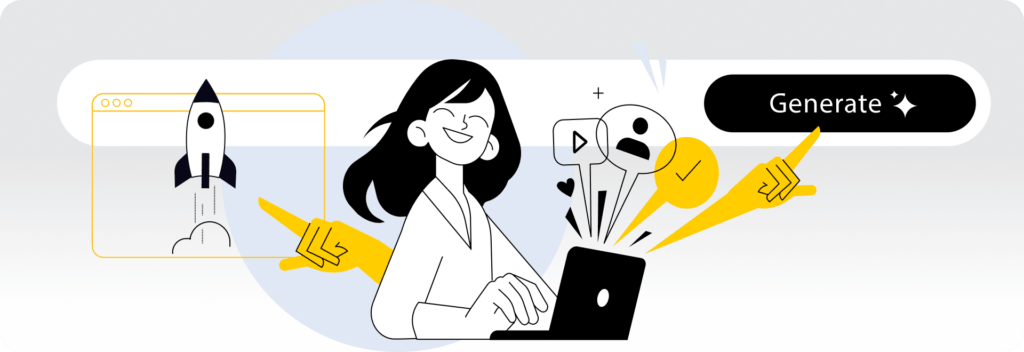
Leveraging AI to create a website works best for low-stakes scenarios where success isn’t critical. In fact, building a website with AI can be a fun personal challenge. You can experiment with the technology to try new things because if it doesn’t work, you can scrap it and start over.
Here are some cases where using AI for web design might make sense.
- Personal blogs or portfolio sites
- Non-mission-critical side projects
- Individual landing pages
- Single-event websites
- “Coming-soon” websites
AI has skewed the age-old project equilibrium of fast/cheap/good by landing hard on the “fast” side of this three-way scale. While speed is always a key factor in business (often with a tangible impact on the other two), leaning too deeply into a quick turnaround by feeding unvetted direction into AI and accepting its first outcome can create complicated business consequences.
B2B websites carry a much heavier load than “for-fun” websites, as they need to earn prospects’ trust, guide them toward action, and turn that interest into qualified leads.
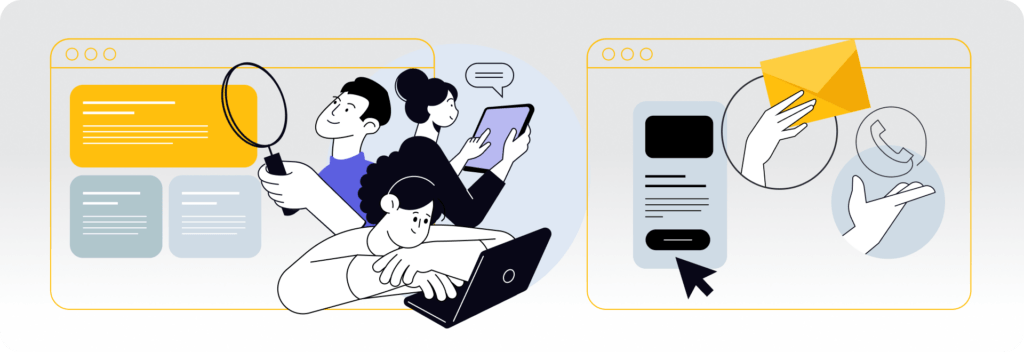
How B2B websites turn visitors into leads
Lead generation is a fundamental aspect of B2B web design. A high-quality website boosts your business’s perception via its content and aesthetic. A great B2B website is also a 24/7 “digital sales assistant,” ready to funnel users into your sales pipeline the moment they click the home page.
The website’s back-end file structure, systems architecture, and user experience should all account for how potential customers engage with the site and how they can be guided toward the next step in the conversion process.
B2B websites feature many touchpoints for lead generation, some more obvious than others. In addition to on-screen call-to-action (CTA) buttons throughout the site, contact forms, gated content, email subscriptions, product demo requests, online appointment scheduling, and webinar or event registration are all ways potential customers can enter your sales orbit.
The goal is to capture the right details, route them to the right team members, and use the data to support your growth objectives. All this functionality is carefully considered before your website is launched.
Where AI can disrupt lead generation
Getting AI to build a website is one thing. Getting your website to bring in qualified leads takes more than a few prompts.
Here are some of the ways using AI for web design can stymie your company’s lead gen efforts and create trouble for your sales pipeline.
| Lead generation risk | How it can affect your sales pipeline |
| Forms that overlook best practices | AI can build a form, but it needs direction on what information to collect, how short to keep it, and how to prevent spam submissions. |
| Pages that don’t guide visitors toward action | Generic layouts might place calls to action where visitors are less likely to engage. |
| Losing prospects before the page loads | Bloated AI-generated code can slow page load times, which may increase bounce rates and negatively impact SEO and GEO. |
| Frustrating user experience | AI can only simulate the experience of a person interacting with your website, which might ultimately leave real visitors confused about where to click or what to do next. |
| Broken functionality after updates | Without consistent site architecture and human-led checks and balances, an AI-generated update can disrupt forms, break pages, and cost you leads. |
| Gaps in the conversion process | Mishandling form submissions and haphazard CRM integrations can halt leads midway through your sales pipeline. |
| Lead handling that overlooks how your business works | Leads from your website should flow seamlessly into your daily operations, which requires a practical understanding of your business. |
AI can execute specific tasks when given precise direction. Understanding how your website should support your business, and how your site’s functionality might need to evolve to advance your sales goals, takes an experienced B2B web design partner. An agency’s team knows how to structure your site, from the technical to the practical to the aesthetic aspects, to generate and capture more quality leads.
AI-generated code can make a website update seem simple. But before going live with AI-created code, consider what the change could affect across your site.
Here are the main risks to look for:
Usability risks
AI tools can generate code, but thinking through the navigation experience for the real-life humans ultimately interacting with your B2B site takes a different set of skills. Poor user experience can push potential customers toward a competitor with a more seamless website flow. Additionally, as web browser applications and mobile devices evolve, using AI for web design might create a front-end site that looks fine for now but can break down as technology changes.
Security risks
AI advances are exposing previously unseen vulnerabilities, and more are likely to emerge. In the wrong hands, AI can be directed to worm its way into the back end of a B2B website and wreak havoc.
Consistency risks
New AI-generated code can clash with existing code, interrupting a site’s functionality. Unless specifically directed to check for downstream effects, AI-generated changes may address the immediate request and inadvertently disrupt other aspects of a website.
Structural risks
AI often spits out the fastest usable code it can generate. This can result in disorganized code that’s a headache to fix when you’re ready to update your company’s website.
Business continuity risks
Because all elements of a B2B website are interconnected on the back end, using AI for web design risks taking down major sections of your site, or even the entire website. Things get particularly tricky when tinkering with the functionality B2B websites rely on to generate and nurture leads, such as mailing list sign-ups, webinar registrations, gated content access, or online quote-generation tools.
Reputational risks
High-quality design, an easy user experience, and a website that performs as expected all shape how people see your business and whether site visitors convert into customers. Strange website performance, oddly worded copy, or obviously AI-generated images detract from your company’s position and undermine perception.
Lack of control
It might seem like a smart move to offload the complex task of web development to AI, but the technology can behave unpredictably and create a mess. If you give AI full access to your company’s back-end website code and leave it unattended, it can make changes you didn’t intend and cause problems across your site.
When to hire a B2B web design agency
For anything beyond extremely simple, straightforward, limited-functionality websites, working with an experienced B2B web development agency is a smarter, lower-risk choice than using AI for web design. Tinkering with page layout, adjusting site structure, or adding new back-end functionality with AI can disrupt elements of the site that aren’t immediately apparent but can negatively affect a business.
Experienced B2B web design agencies bring expertise in systems thinking, architectural design, business operations, digital security, user experience design, and more. These are essential competencies that run behind your coded pages, ensuring they work as seamlessly and reliably as you expect.
What a web development agency brings to the project
Experienced web development partners manage the essential technical, logistical, and foundational aspects of your website and the development process.
Their teams bring the following capabilities:
- A holistic understanding of your website’s functionality and how it supports your business
- The flexibility to change course while ensuring consistency throughout the site
- Clean, clear back-end code that holds up over time and is easy for future teams to understand
- A consistent approach to implementing changes throughout the website’s system architecture
- Checks and balances that guard against technical glitches and unintended downstream business consequences
- Recommendations grounded in real-world experience
- Security expertise to protect your website with the latest protocols
Artificial intelligence tools can play a supporting role – in the capable hands of experienced web developers. But responsibly using AI to support B2B web design requires deep fluency in the technology, clear direction, and significant human oversight.