Fintech web design is a unique breed in the realm of B2B websites. The stakes are high with fintech buyers, who are dealing with sensitive data, strict regulatory laws, and of course, their customers’ money.
The most effective website design for fintech companies not only communicates how your product will solve their challenges, but also builds credibility and trust among these notoriously skeptical buyers.
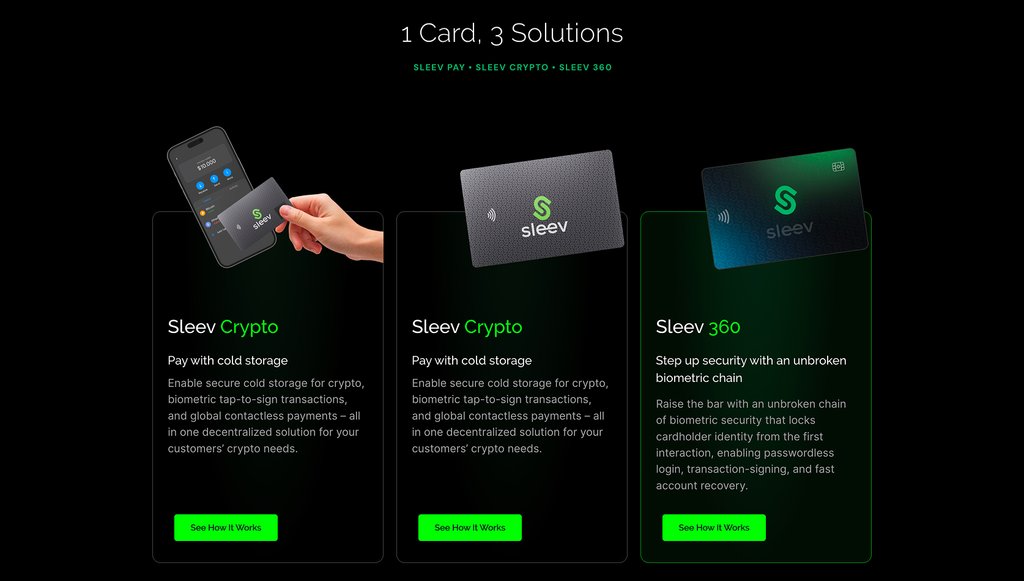
As a B2B website design firm with more than 15 years’ experience working with world-class fintech brands, we’re sharing four things we always include in our fintech web design.
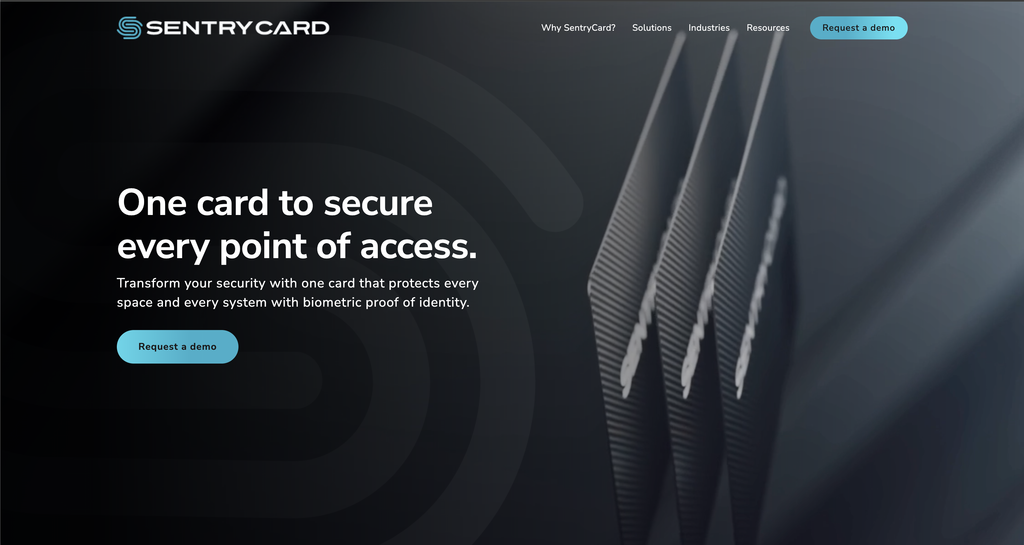
1. Balance institutional trust with web design trends
Our mantra with fintech web design is: trust comes first, trends come second.
While it may appear cool and eye-catching, if a design trend makes information harder to find, makes text harder to read, or increases website load times, skip it.
Visual clutter, unclear navigation, or unpredictable movement can trigger confusion, annoyance, or distrust. Design decisions for the fintech sector should be highly intentional and strategic. When your fintech website delivers a smooth, effortless experience, buyers subconsciously think your product will do the same.
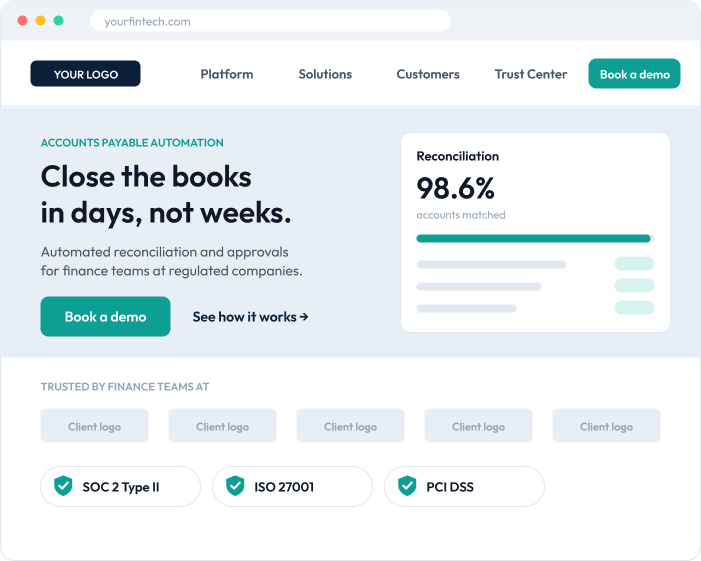
2. Show your product clearly
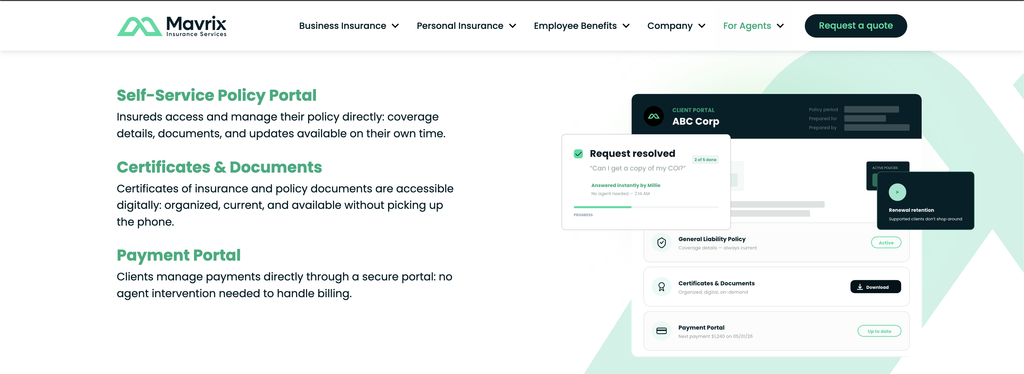
Build visual trust with actual software screenshots that give buyers a clear picture of what they will be getting (just be sure they are anonymized).
A concern we often hear is “but our product UI isn’t aesthetically pleasing.” If that’s the case, a skilled designer can create polished product mockups that feel true to your brand while communicating value.
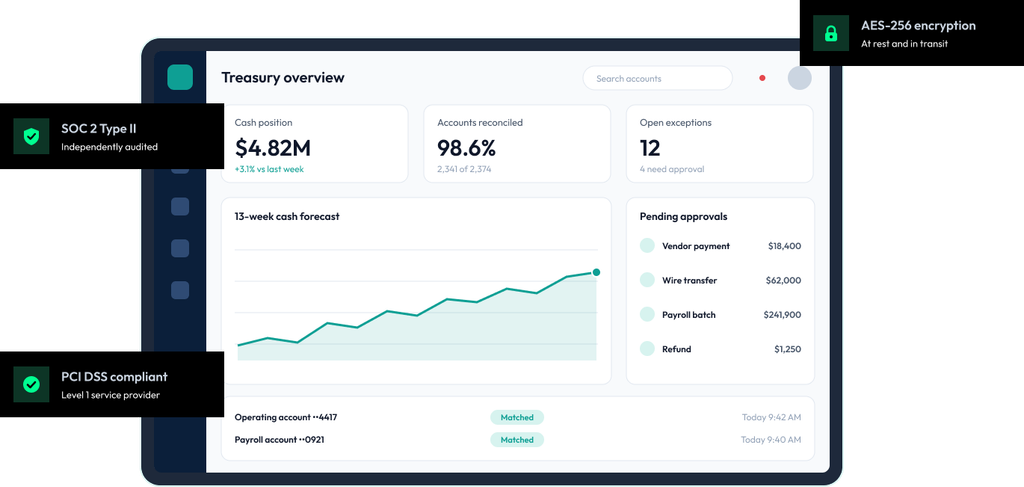
If your product is visually complex, break it into simpler visual snapshots. Select the most compelling, benefit-specific dashboard elements and customize them to create an easily digestible story.
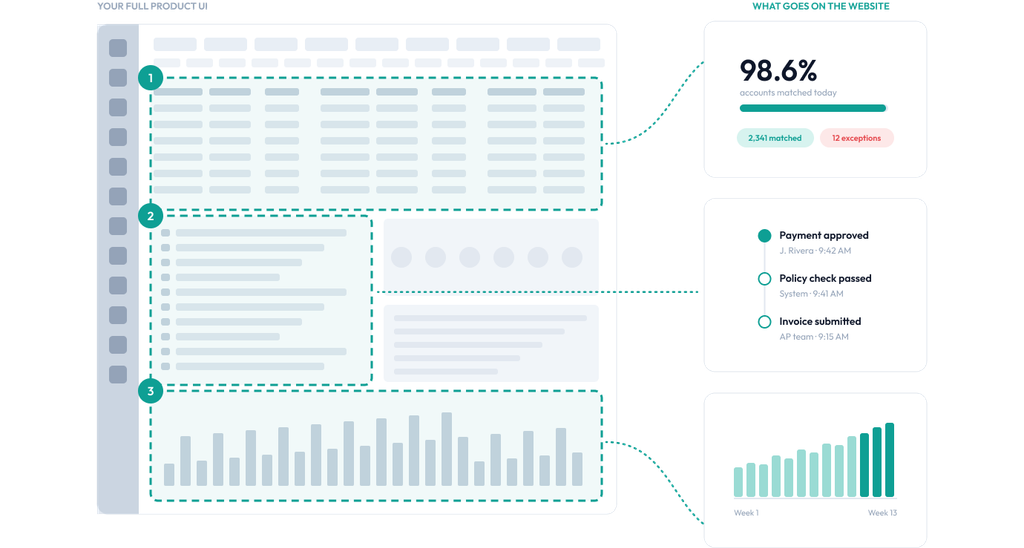
Visuals should always be supported with clearly written live text to increase SEO value and give AI bots something to pull from.
3. Build “no-brainer” navigation
Fintech audiences are often made up of multiple stakeholders that influence the buying decision. Your fintech website should speak to all of them.
Create separate paths with landing pages for various roles, including CFOs, controllers, IT/security, and operations teams. Content on these pages should speak directly to specific pain points for each role, then demonstrate and prove that your solution can solve them.
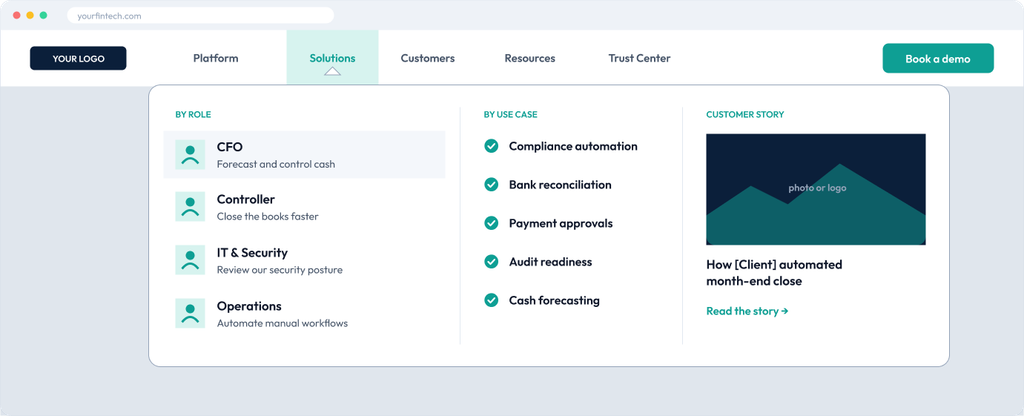
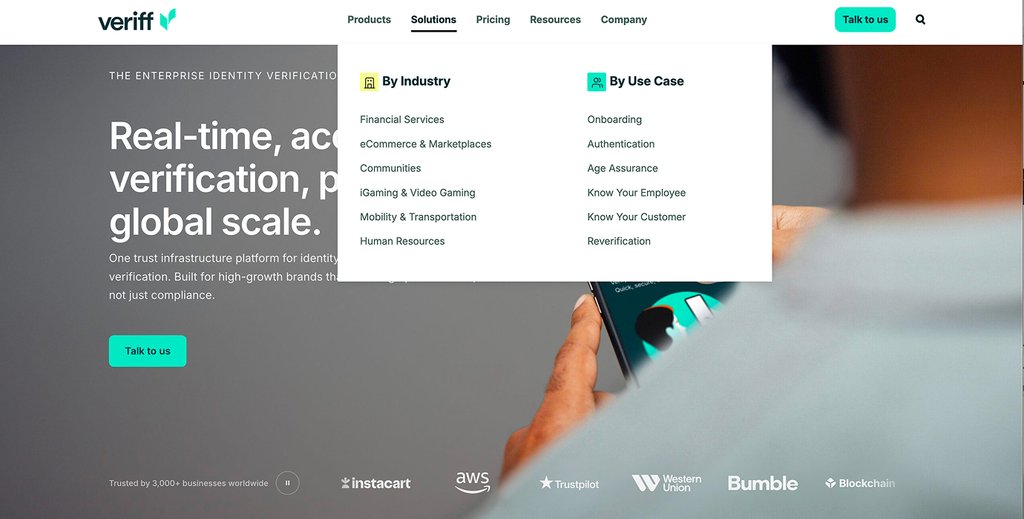
You can also include a use cases section on your navigation to show how your product addresses various buyer concerns. For example, maybe your product helps teams automate compliance. A dedicated page that showcases how it does this for your customers gives them confidence you can handle their specific concerns.
Fewer clicks to relevant content means more qualified leads.
4. Don’t bury compliance and security credentials
If you have certifications, security credentials, or compliance badges, highlight them prominently on the home page and product pages where people can easily see them. These go a long way in assuring fintech buyers your solution addresses one of their biggest concerns.
You can also consider a dedicated “Trust and Compliance” page that includes all your certifications, credentials, and awards in one place. Link to it from your main navigation and product pages.
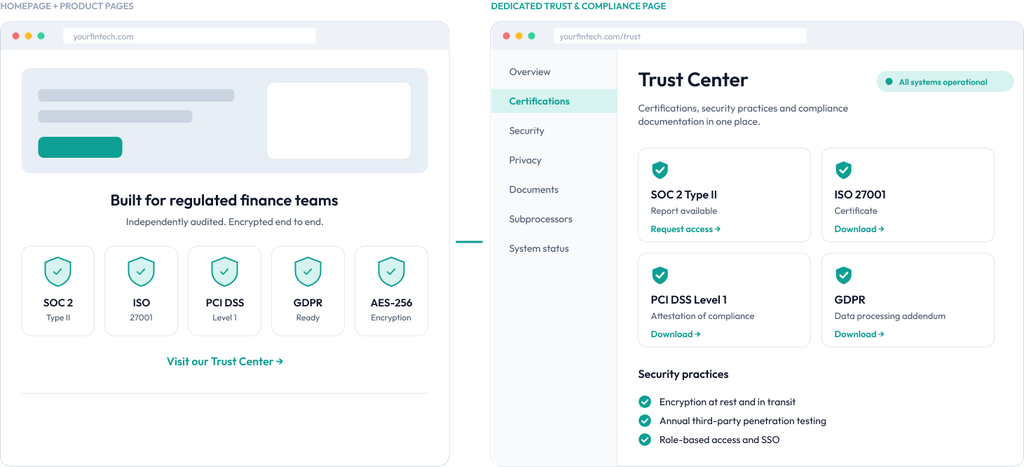
This is one of the easiest wins in web design for fintech. It helps buyers doing due diligence as well as AI tools answering questions about your security posture.
Fintech website design FAQs
What are the most important elements to include in fintech website design?
The two most important elements to include on a fintech website are clear product features and benefits plus trust signals. Buyers must understand exactly what your product will do for them, but also gain confidence that it will address compliance concerns and mitigate risk. These are far more important than flashy trends.
Where should security badges go on a fintech website?
Be sure to place security badges, certifications, and compliance information where visitors will actually see them, not just in the footer. Include them on the home page, product pages, and consolidated on a separate Trust and Compliance page.
Is your fintech website ready for a redesign? The Bop Design team builds fintech websites that not only build trust, but drive right-fit leads. Let’s chat about it.